A Question of Scale
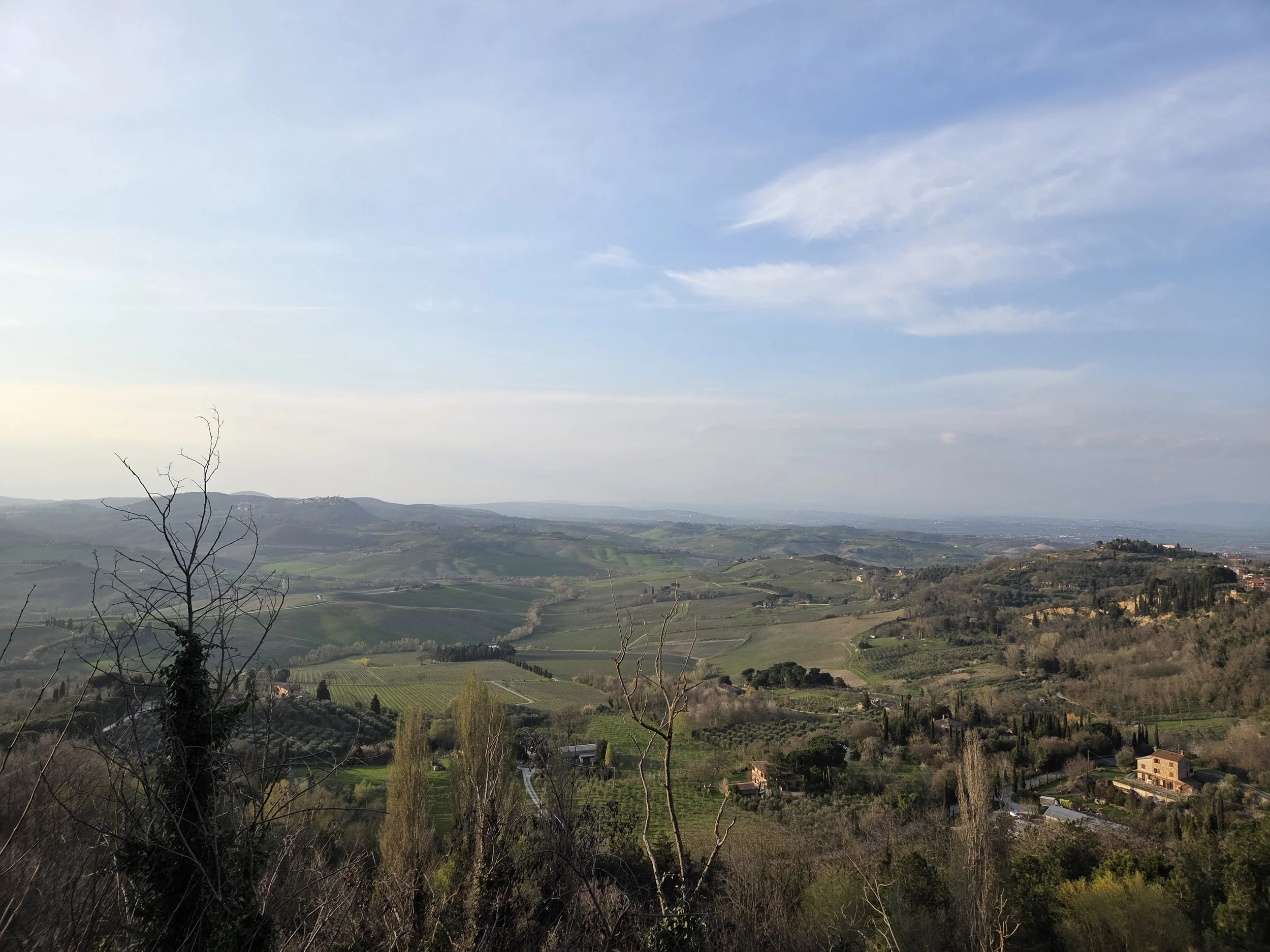
My partner’s abs were asking for a break. For fifteen turns she’d been cycling between gasping, laughing, and holding her iPhone above the windshield to catch the view. We moved through the rolling hills of olive trees and vineyards, then slipped back into the forest where the road tightened so much I barely left second gear.
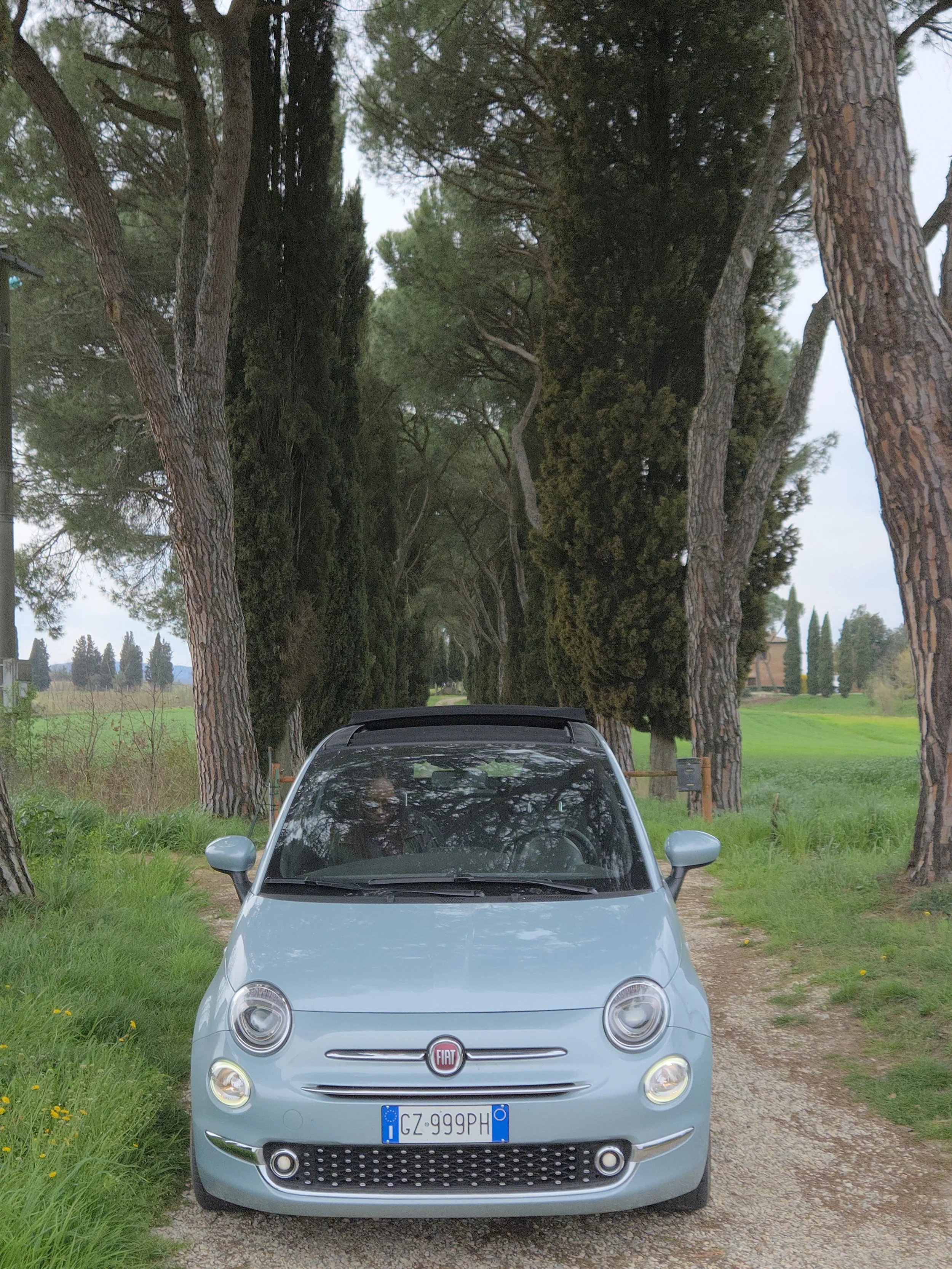
Fiat’s modern classic, the Cinquecento, was giving us the full Tuscan experience. It wasn’t fast, but it didn’t need to be. There’s just enough power to pass a tractor, and a wheelbase short enough to dance through corners. When the road opens, we fold the roof back and let in golden light, birdsong, and the smell of spring waking from winter.
The car felt right for the road. A week later, I realized something else: the road felt right for the human.
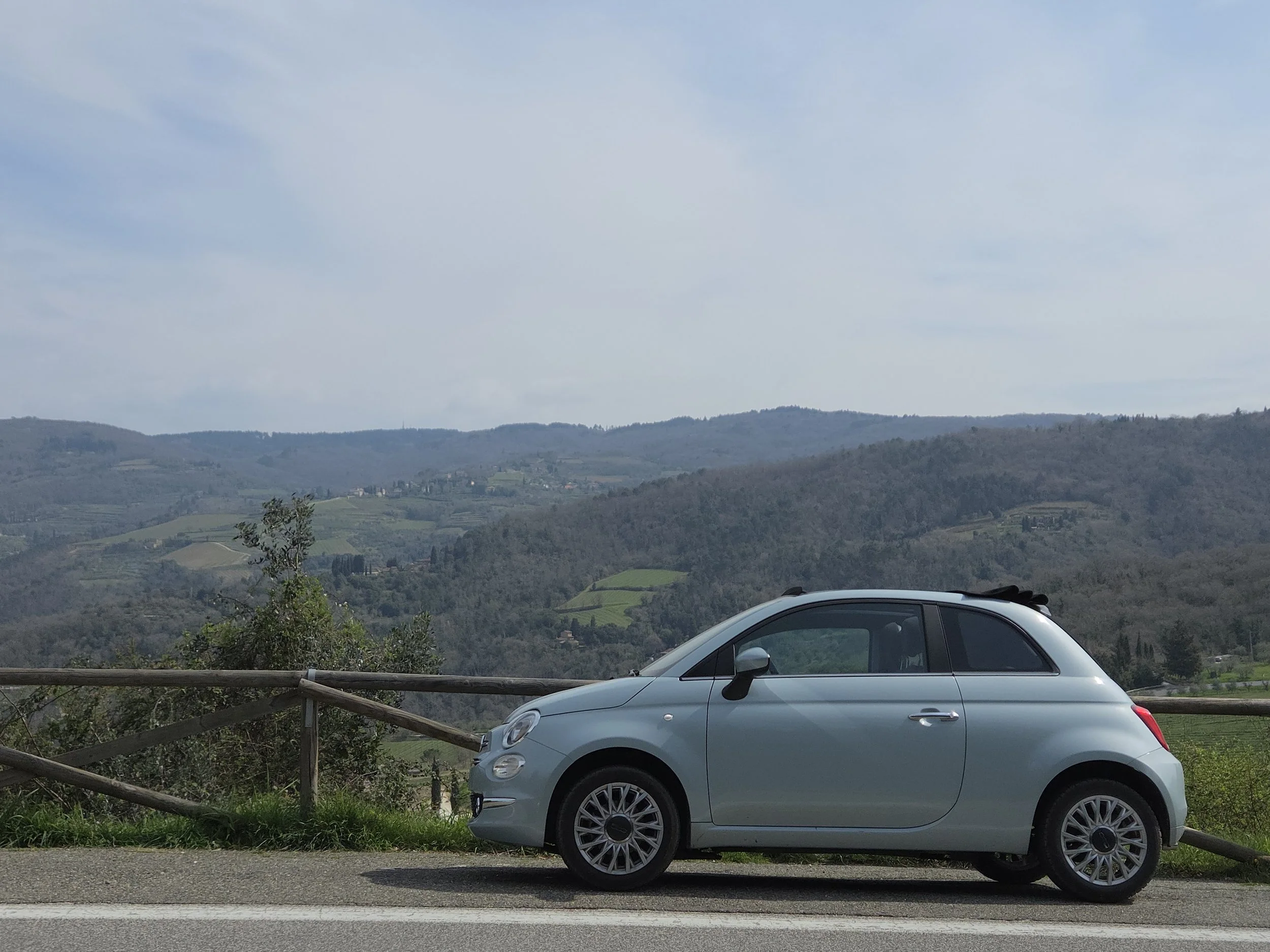
That feeling sharpened as we climbed into the medieval town of Montepulciano. The streets narrowed, the grade steepened, the walls closed in. You become aware of your body here: your footing, your breath, the space around your shoulders. Even walking raises your heart rate. You don’t rush, you move carefully, deliberately.
This is a place built to human scale.
In nearby Pienza, that idea becomes explicit. Reshaped in the fifteenth century under Pope Pius II, the town is an expression of Renaissance humanism—proportion, perspective, civic life made physical. Here, theory was rendered in stone. You don’t need to understand the philosophy to feel it. Your body understands it first. The space makes sense before your mind explains why.
And somehow, the Fiat fits.
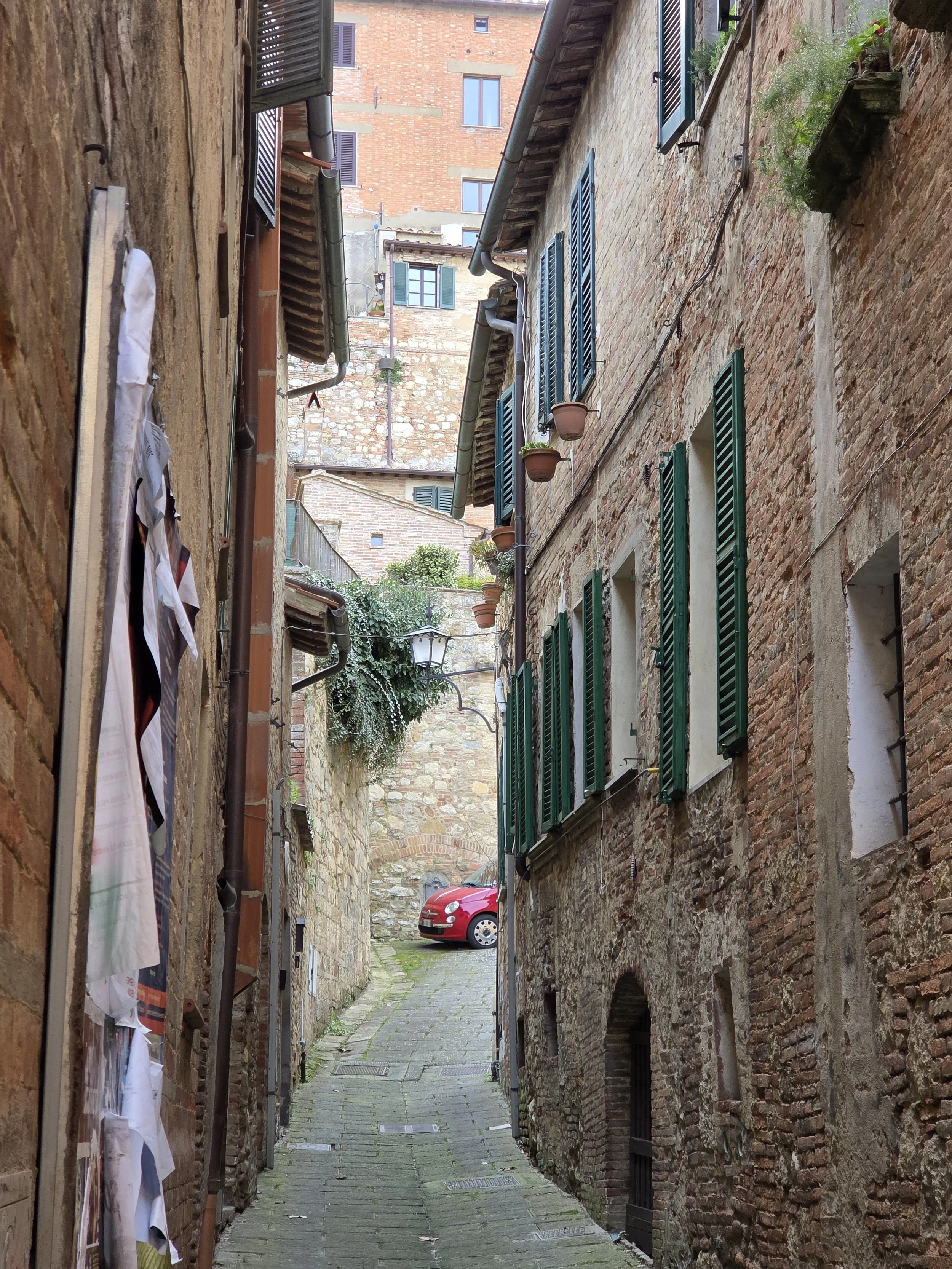
Despite being a modern object, it feels at home. Small, light, legible; it doesn’t dominate the environment, it negotiates with it. The steering is direct, the footprint is clear. You place the car carefully through an alley, around a blind corner, into a tight space. The car doesn’t overwhelm your senses, it sharpens them. Pedestrians step aside, but without tension. The car doesn’t feel threatening, it feels like part of the environment.
Try the same thing in a large modern SUV and everything changes. Your heart rate rises and the margins disappear. It feels less like moving through a place and more like forcing your way through it—like guiding a planet through a living room.
Later, I thought about Bend, Oregon, where I had been living prior to Europe. It’s a beautiful place full of mountains, forests, and open skies. The roads are wide, the lanes expansive, the speeds high. Large trucks and SUVs fit naturally there. They make sense within the scale of the environment. But something else shifts.
I didn’t notice it at first. It just became normal; getting in the car to go everywhere, even places that should have been a walk. Distances stretch, interaction fades. The city has organized itself around movement, not presence. You drive, you park, you move on. Rather than connection, you feel isolation.
This isn’t unique to Bend. It plays out across much of America. Cities built around the automobile prioritize throughput and efficiency. And in doing so, they quietly reshape the experience of being there.
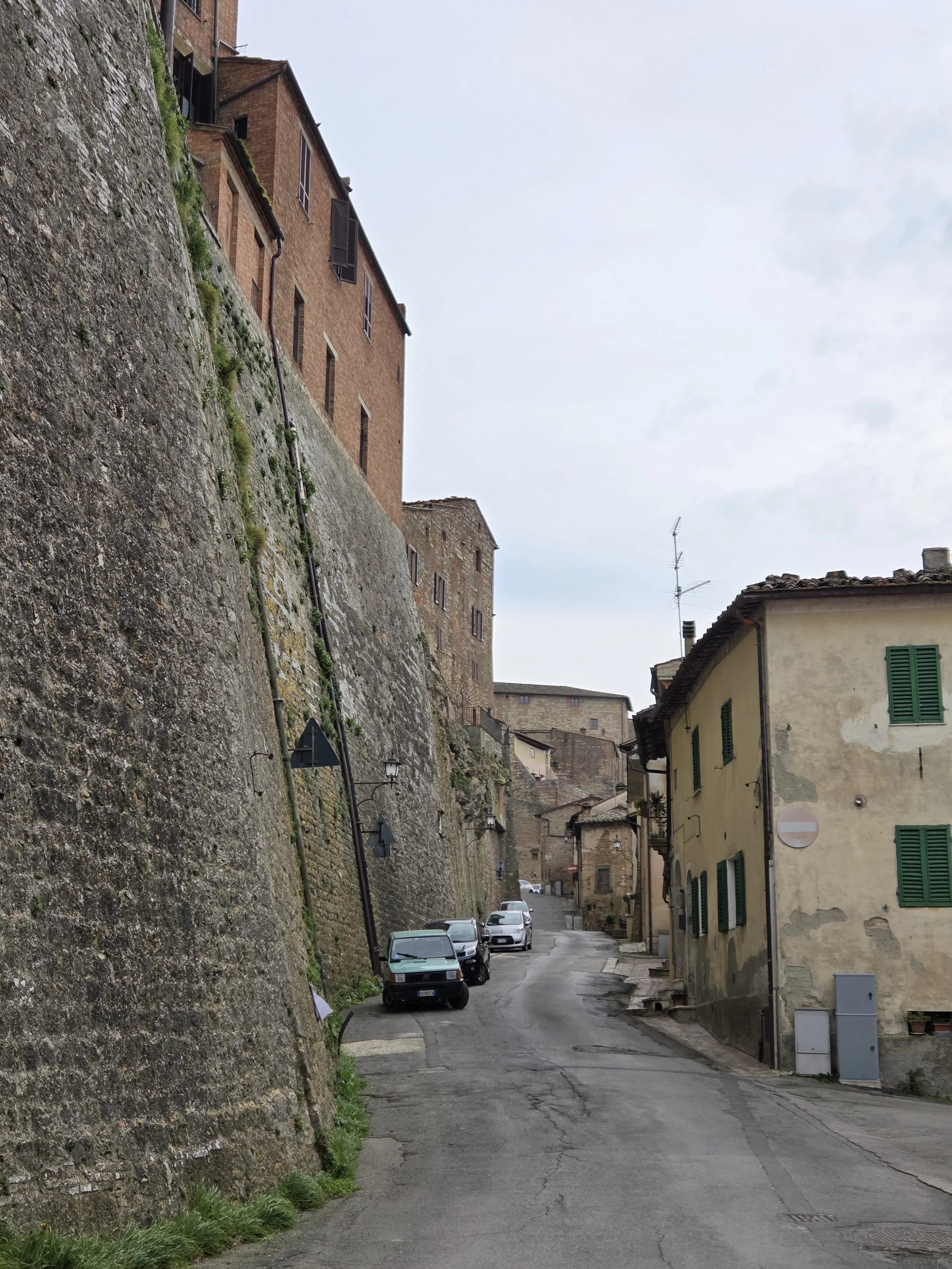
So what do we lose when everything gets bigger? What happens when streets are no longer scaled to the body, but to the machine? When ease replaces engagement? When movement replaces presence?
Driving out of Montepulciano wasn’t easy. There were pedestrians, strollers, tight corners that seemed eager to claim a bit of paint. But I loved it. I was paying attention. Some things only make sense at the right scale. And I’m starting to wonder how much of modern life feels off simply because it isn’t built for the human anymore.