Proportion as Power: How the Range Rover and Phantom Command Space Without Noise
Some cars don’t just pull up, they pull you in.
A Range Rover rolling into view doesn’t need drama or ornament to announce itself. A Phantom doesn’t chase attention either. Yet both carry a gravity that’s immediately felt. This isn’t about horsepower, screens, or even craftsmanship alone. It’s about proportion and how proportion quietly communicates power, luxury, and permanence.
Luxury, at its highest level, is often architectural.
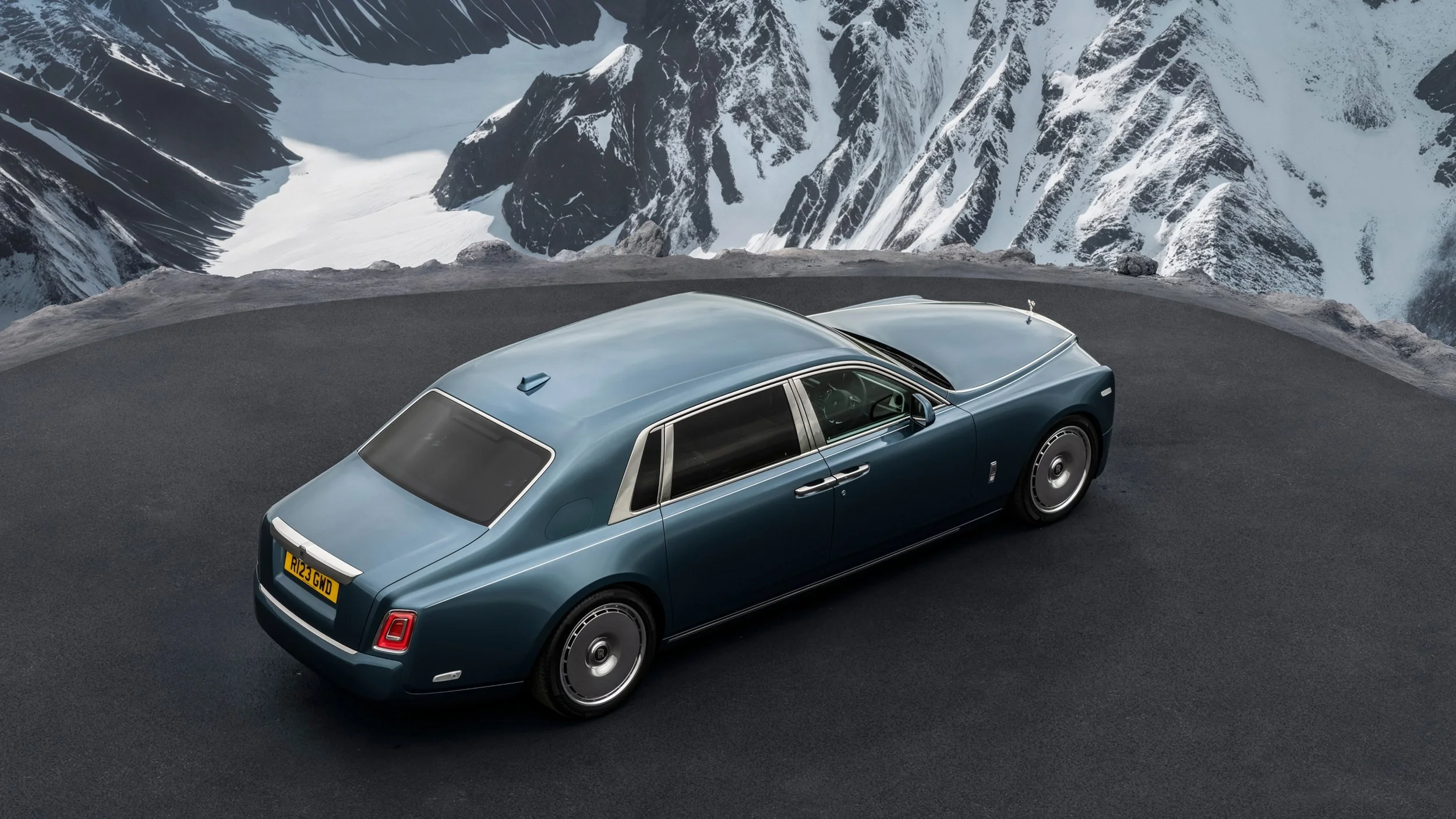
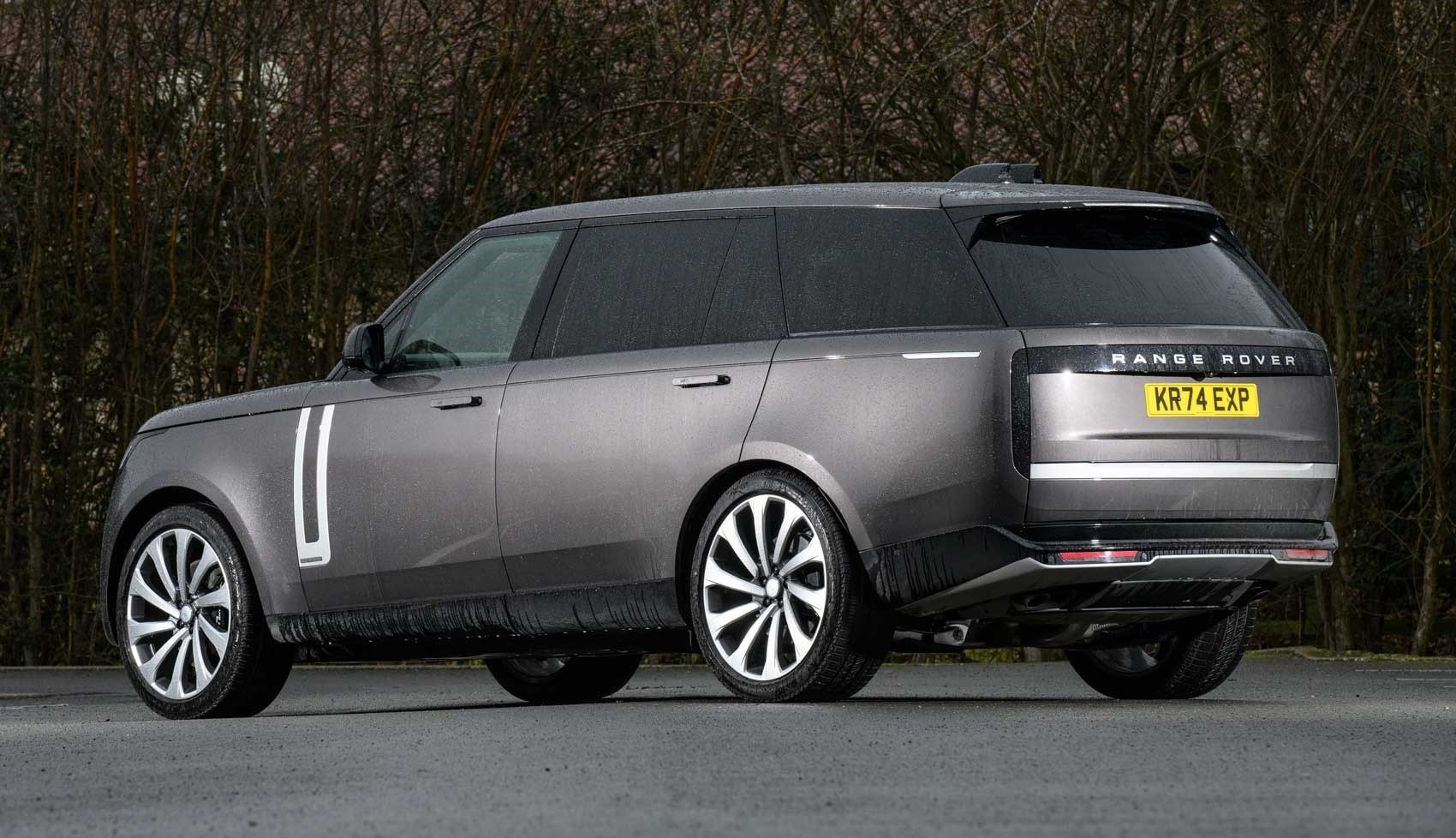
Mass before motion
Most modern cars are designed around movement. Their proportions lean forward, cabins pushing toward the front axle. Lines sweep aggressively, chasing the illusion of speed even at rest.
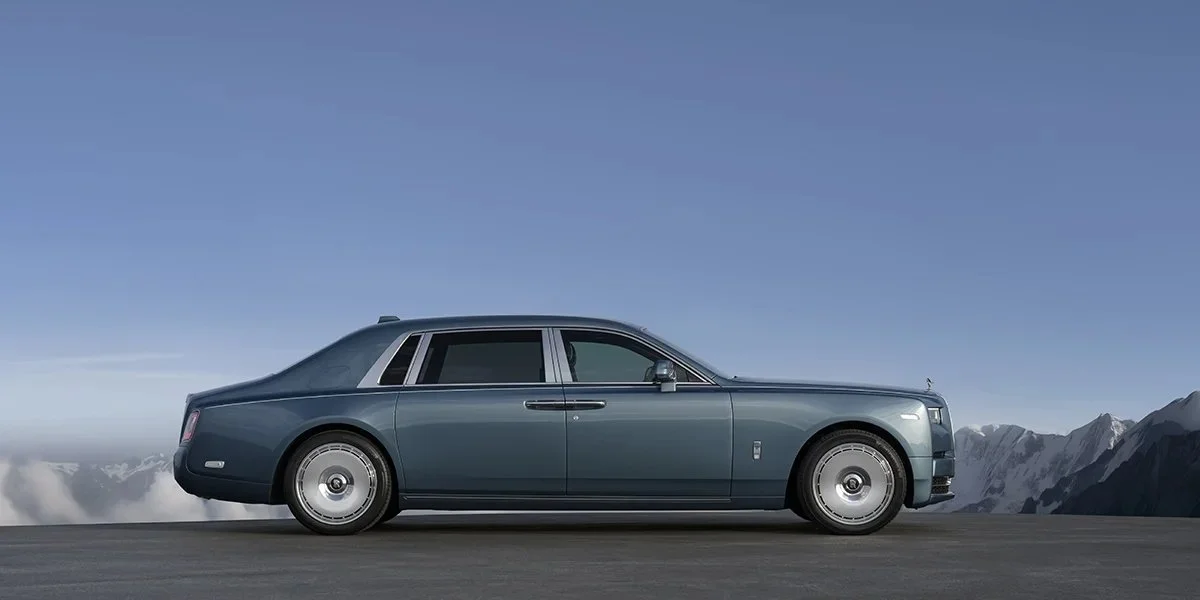
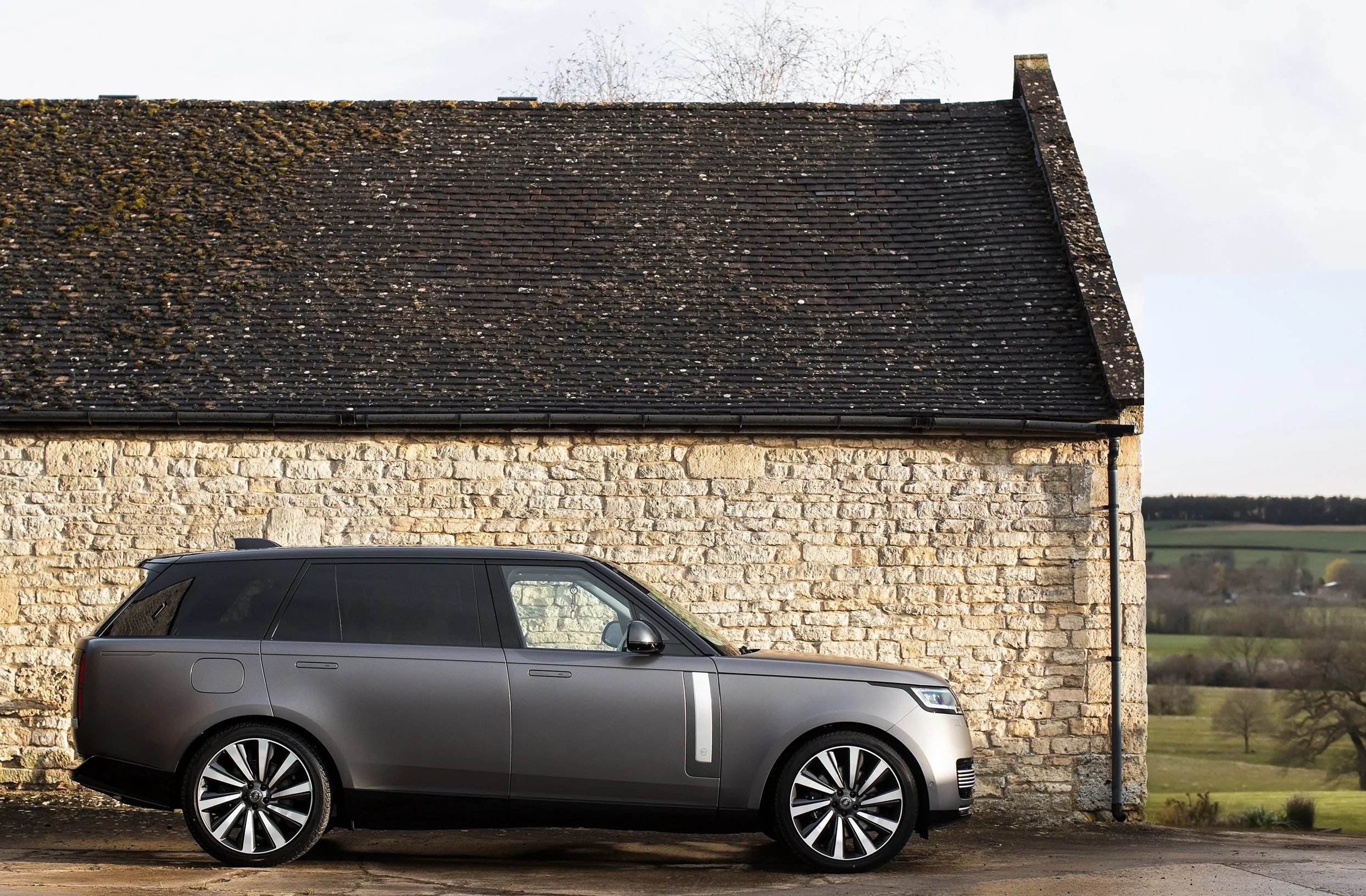
The Range Rover and Phantom do the opposite. They emphasize mass before motion, using:
Long wheelbases
Upright stances
High, flat beltlines
Thick sections of uninterrupted bodywork
These vehicles don’t look like they’re about to move quickly, they look like the world comes to them. That distinction matters, speed suggests urgency, mass suggests control. Their power isn’t in acceleration but in inevitability, like a tectonic plate shifting beneath your feet. You don’t outrun it, you accommodate it.
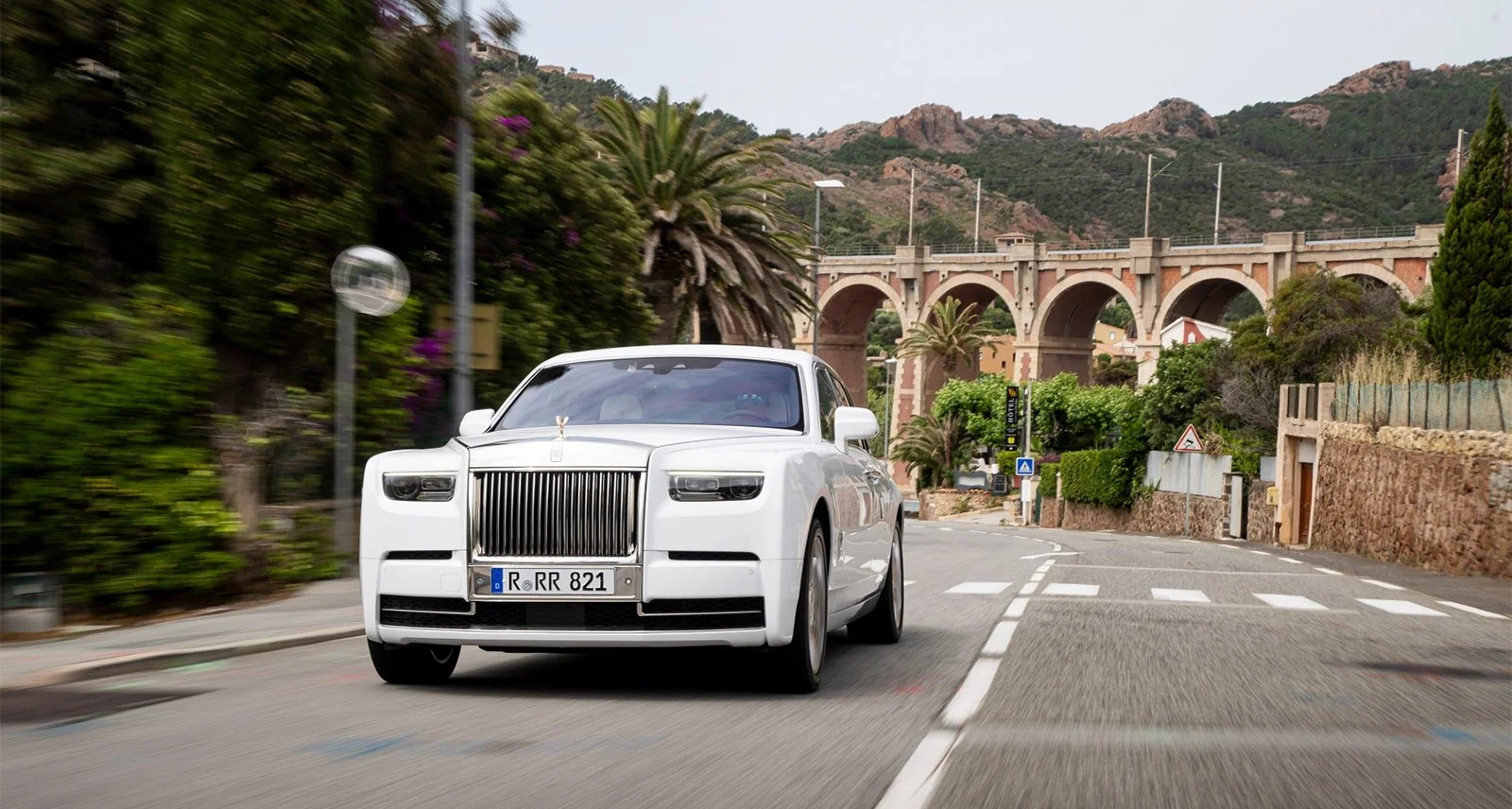
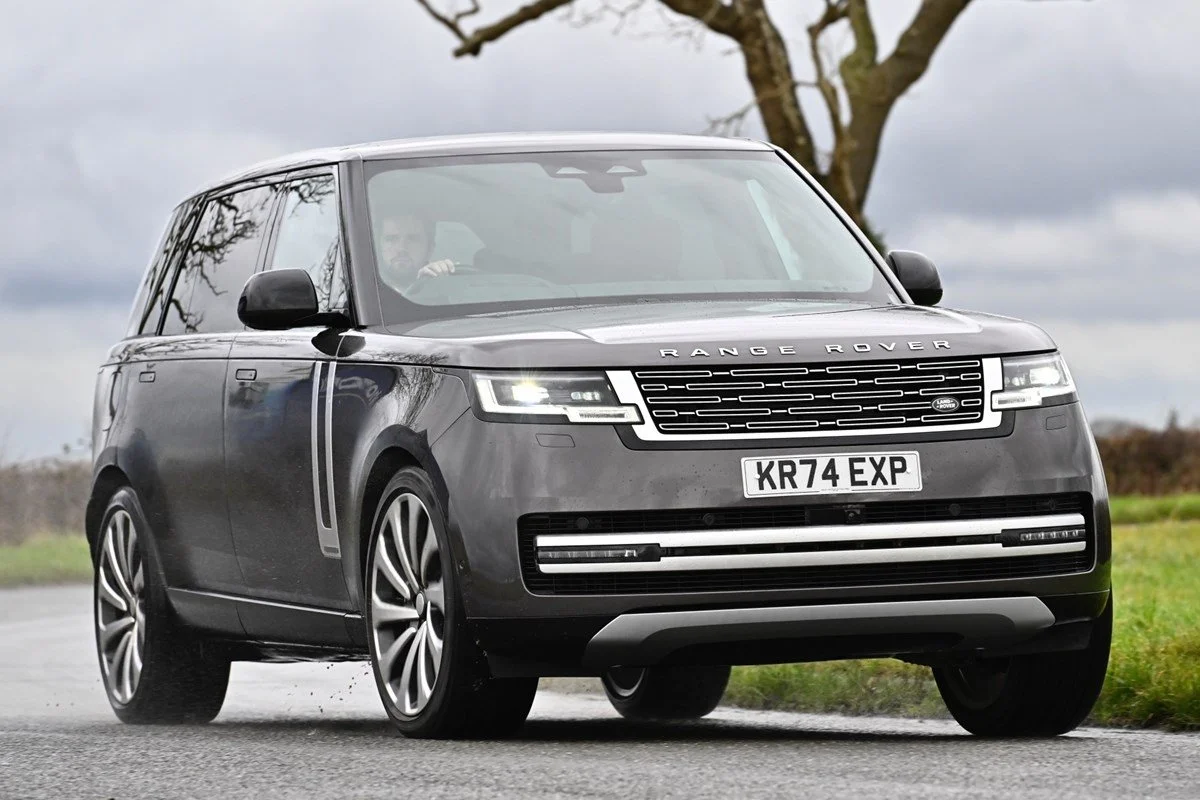
Verticality over aggression
Modern performance design often leans on sharp angles and downward-tilted noses. Luxury presence does the opposite: it goes vertical.
The Phantom’s grille is unapologetically upright, a modern reinterpretation of classical architectural facades. It doesn’t slice the air; it meets it.
The Range Rover, similarly, avoids overt aggression. Its face is squared, calm, almost aloof. The vehicle doesn’t bare teeth, it closes ranks.
Verticality reads as authority because it mirrors human power dynamics: standing tall, shoulders back, unmoved.
The long hood as symbolic territory
Both vehicles devote an enormous amount of visual real estate to the space in front of the occupants.
The Phantom’s hood is famously long, flat, uninterrupted; not sculpted but claimed. It functions like a forecourt, not a mechanical necessity. Even in an era where engines no longer require such acreage, Rolls-Royce insists on it. Why? Because a long hood signals command over space.
The Range Rover, though packaged differently, achieves a similar effect. Its hood is broad and horizontal, visually anchoring the vehicle. It doesn’t slope away like a sports SUV. It establishes a plane—calm, level, confident.
In both cases, the hood becomes a psychological buffer.
Slab sides and the confidence of restraint
One of the most important, and underappreciated, luxury design tools is the slab side. Large, flat body surfaces are risky. They show reflections, imperfections, and demand manufacturing precision. They also resist visual noise.
Both the Phantom and Range Rover embrace this risk.
Their sides are quiet. Minimal creases. Long uninterrupted planes. This restraint communicates something subtle but powerful: nothing needs to be hidden. In contrast, busy surfacing often reads as insecurity, as if the car needs constant visual stimulation to justify itself.
Human scale and the rear passenger
Perhaps the most telling proportional choice is where the emphasis isn’t.
Neither vehicle prioritizes the driver. The Phantom’s cabin proportions clearly favor rear passengers. The Range Rover’s roofline and glasshouse maintain dignity for all occupants, not just the person behind the wheel.
This matters because true luxury has historically been about being carried, not chasing engagement. These cars are designed around presence while stationary, comfort in transit, and arrival as a moment.
Why this still works today
In an era of shrinking attention spans and maximalist design, these proportions feel almost radical. They don’t shout about innovations, they don’t chase trends, they definitely don’t apologize for their size. And that’s exactly why they work.
The Range Rover and Phantom don’t express luxury through excess or intimidation. They express it through composure. Their proportions feel balanced, unhurried and unreactive. Nothing strains forward. Nothing retreats. The car appears complete before it ever moves.
The same is true of real presence. It shows up with an even gaze, a steady voice, and a pace that suggests attention rather than urgency.
In that state, nothing else has to shrink. The space simply organizes itself.