When Power Loses Its Center
When the Mercedes-AMG C63 replaced its iconic V8 with a highly complex, high-strung four-cylinder plug-in hybrid drivetrain, the reviews weren't subtle. On paper, the car was extraordinary: more power, cutting-edge hybrid technology and a clear link to Mercedes’ Formula One expertise. On the road, it felt unsettled: heavier, more complicated and less charismatic, it exposed a deeper tension inside the brand, one that goes beyond regulations or engineering and into identity itself.
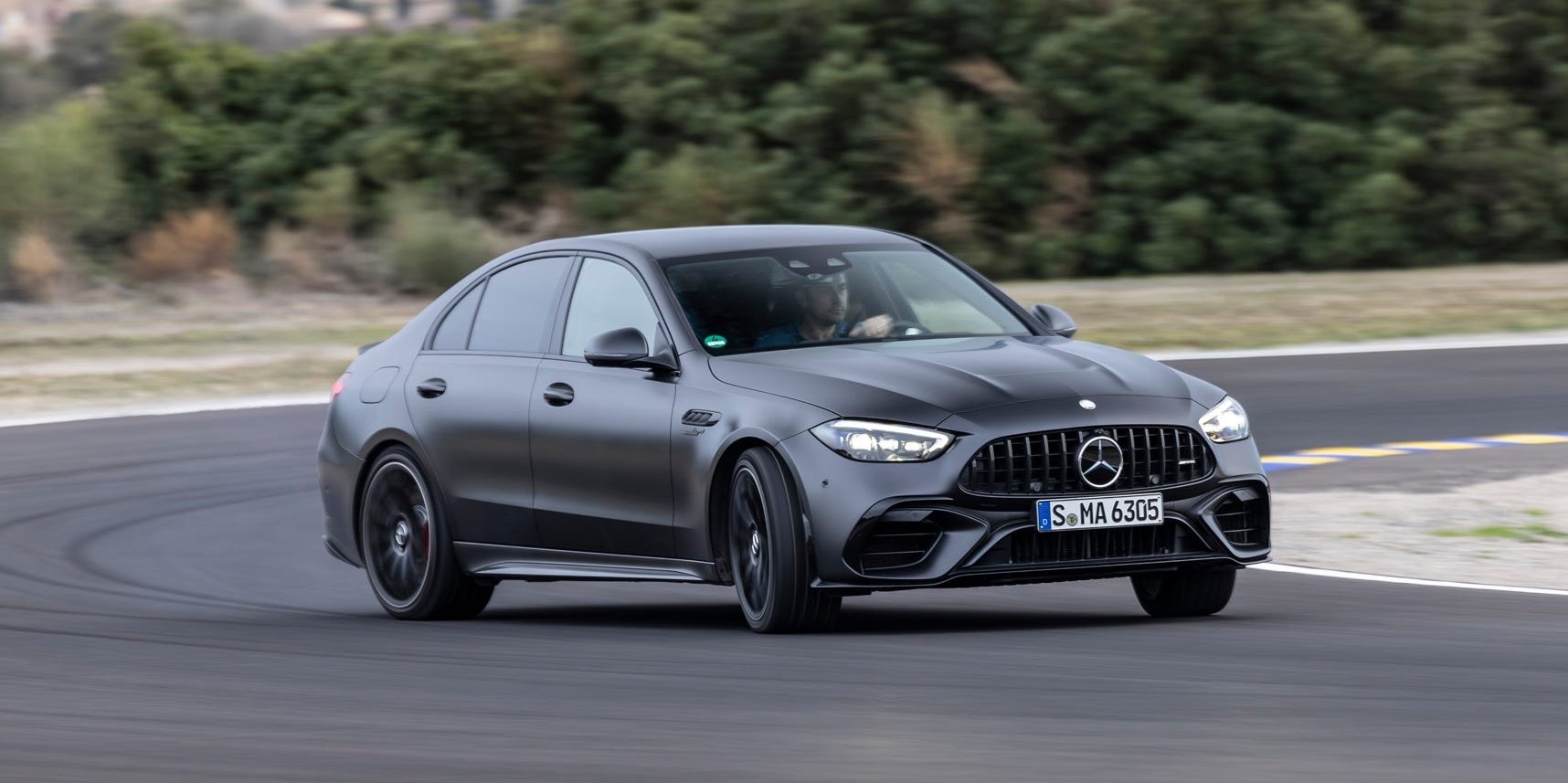
The official story is straightforward. EU emissions rules tightened. Large displacement engines were living on borrowed time. Mercedes-AMG needed to demonstrate that it could remain dominant in a world where electrification and hybridization were no longer optional. The C63 became the proof point: a turbocharged four-cylinder paired with an electric motor, a two-speed rear e-drive unit, and a battery system inspired by F1 energy recovery. The numbers were impressive. The intent was clear, but the feeling was off.
This wasn’t evolution. It was a reaction.
Intelligence as Armor
AMG’s V8s were never just about output. They were handbuilt offerings to the gods of combustion. They sounded like Zeus after a weekend in Vegas. You didn’t have to justify them with lap times or efficiency charts. They existed with confidence, grounded in torque, sound, and simplicity. When that center began to erode, when the future made their extinction inevitable, Mercedes didn’t pause to ask what a new kind of grounding could look like. Instead, it reached for technology as armor.
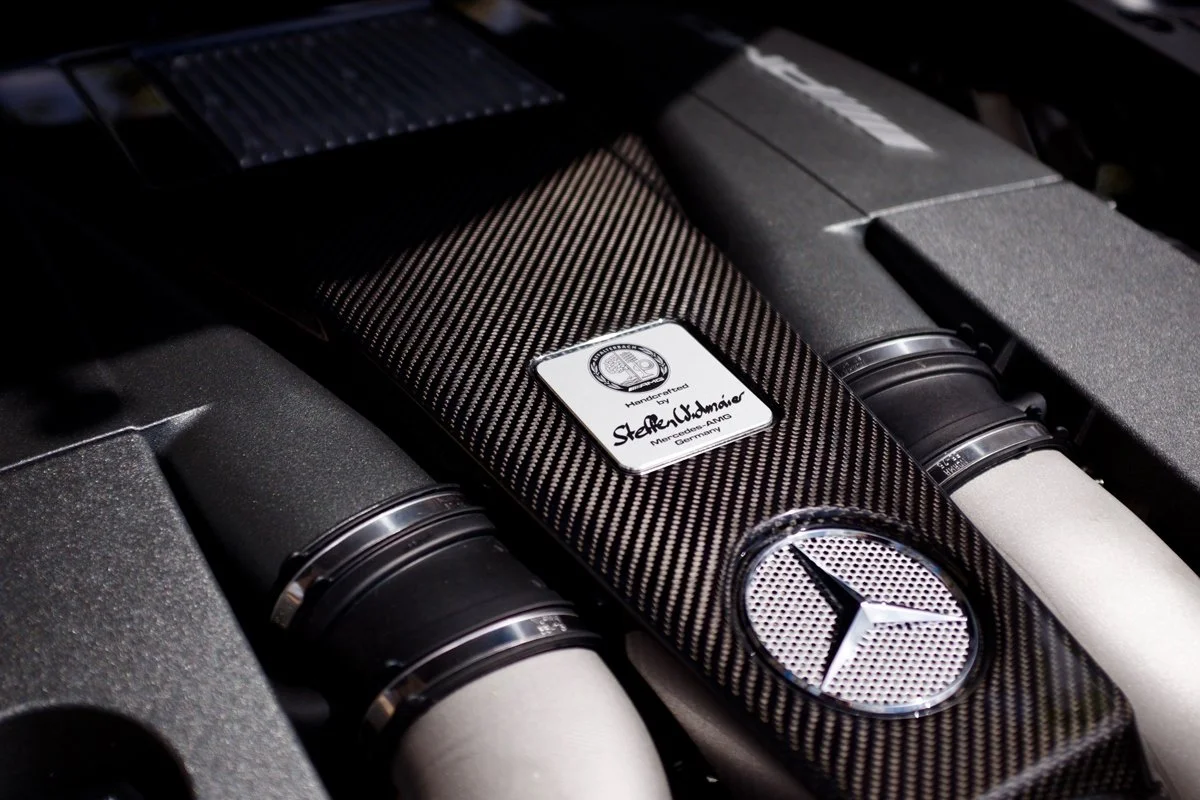
The new C63 reads like an argument rather than an expression. Every layer of complexity feels defensive: more systems, more modes, more screens, more talking points. It’s performance by credential. The car constantly reassures you that it’s still fast, still advanced, still relevant. And that’s the tell. When something is truly centered, it doesn’t need to convince you.
This is a pattern that shows up far beyond cars.
Overcompensation and the Cost of Proving You’re Still Strong
When a core source of identity, be it strength, authority or relevance comes under threat, the masculine instinct is often to overcompensate. Do more. Add layers. Prove harder. Instead of slowing down and recalibrating, energy goes outward. The focus becomes optimization and monitoring, replacing trust and presence. From the outside it might look impressive; from the inside it’s exhausting.
The C63 feels like that internal state, engineered.
Mass as Metaphor
Weight becomes the most visible symptom. The outgoing V8 car was emotionally heavy but mechanically straightforward. The new car is mechanically heavy and emotionally complicated. The mass grew and migrated. Battery, motors, cooling systems, software layers. The result is a car that’s undeniably quick but rarely playful, capable but rarely relaxed. It’s always doing something. Always managing. Always working.
Mercedes’ decision to lean on its F1 narrative makes sense intellectually. The brand has earned its hybrid credentials on the world’s most demanding stage. But Formula One succeeds because everything is subordinate to a single goal. Weight is fought ruthlessly. Complexity exists only if it reduces your lap time. Drivers accept cognitive load in exchange for performance.
A road car is a different contract.
Lost in Translation
You don’t want to just operate your performance sedan. You want to embrace it. You want it to feel intuitive, alive, and grounded. Translating F1 technology into a road car requires restraint and interpretation, not brute transfer. In the C63, the translation never fully happened. The technology remained visible, audible, and insistent.
What makes this story more interesting is that Mercedes had other options.
Downsizing the engine was inevitable. But downsizing doesn’t have to mean overloading. AMG could have chosen a lighter, simpler hybrid system. They could have focused obsessively on weight reduction rather than power escalation. They could have bucked the modern German trend of “more everything” (more screens, more mass, more modes) and instead chased clarity.

Imagine a C63 that accepted fewer numbers on the spec sheet in exchange for a sharper soul. A car that prioritized steering feel, throttle response, and composure over peak output. A car that trusted lightness and balance rather than complexity and control. That would have been a different kind of confidence, one rooted in restraint.
Historically, some of the most revered performance cars emerged from exactly that mindset. When power was limited, engineers sharpened feel. When regulation tightened, designers simplified. Greatness often comes from choosing what not to do. Instead, the C63 became a monument to overcommitment.
Was the latest C63 a failure? Probably, but it was also a lesson.
Mercedes-AMG is still one of the most capable performance divisions in the world. But this chapter illustrates what happens when identity is threatened and the response is to prove rather than to re-center. The car becomes impressive, but not nourishing. Intelligent, but not settled.
In machines, as in people, true power comes from alignment. From knowing who you are even as conditions change. When that alignment is lost, strength turns performative. Heavier. Louder. More anxious.
The next evolution for AMG won’t come from adding another system or another argument. It will come from remembering that confidence doesn’t need to shout, that performance can come from subtraction instead of addition.