Lewis Hamilton, Ferrari and the Future of Masculinity
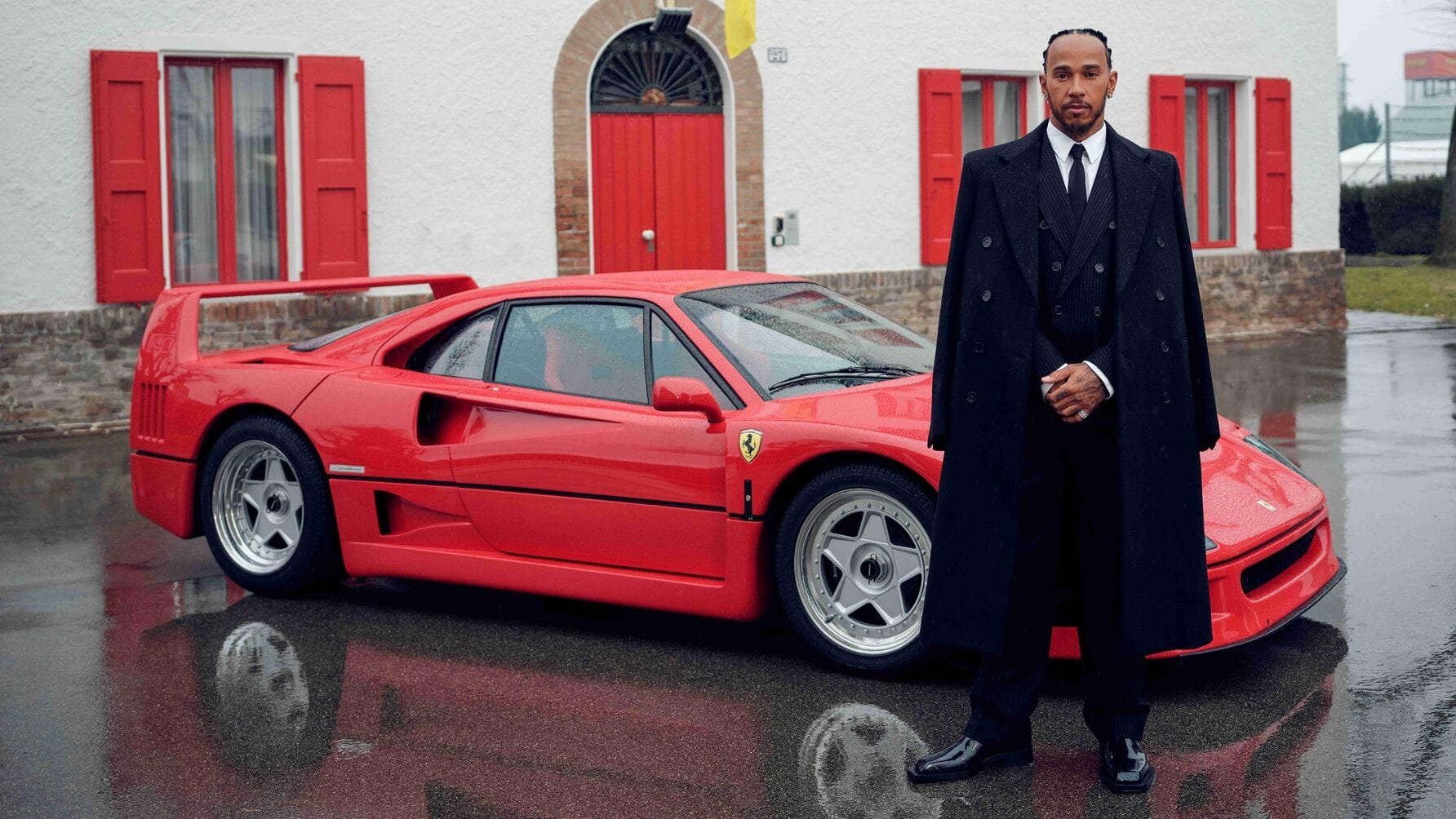
In March 2025, Lewis Hamilton shared a thought that felt almost childlike in its enthusiasm. He wanted to design a Ferrari, an “F44,” he said, “Baseline of an F40, with the actual stick shift. That’s what I’m gonna work on for the next few years.”
It wasn’t just about a stick shift, it was about feel. Hamilton’s comment resonated because it hinted at something many enthusiasts sense but struggle to articulate: that performance alone no longer satisfies. And in that moment, Hamilton, a seven-time world champion, sounded less like a driver chasing tenths and more like a man seeking integration.
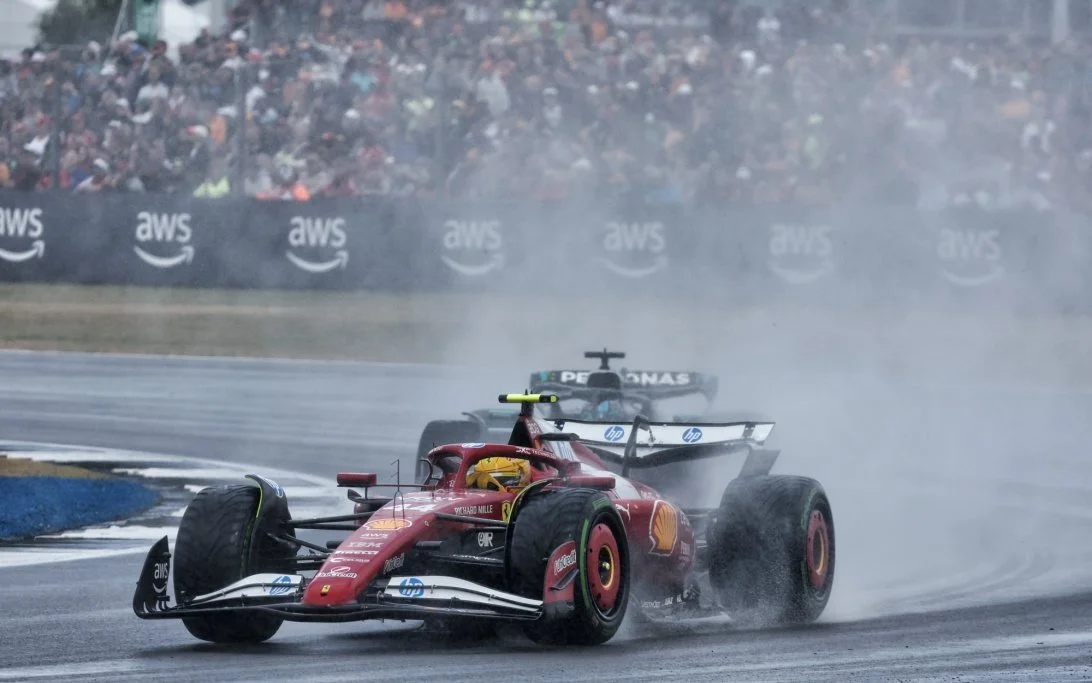
Unfortunately, the 2025 F1 season was filled with frustration for Ferrari and Hamilton. The tension between them since then has felt larger than sport. It reflects two models of masculinity meeting at an inflection point.
A Culture Forged in Victory
Ferrari’s institutional identity was forged by Enzo Ferrari, who famously said, “Race cars are neither beautiful nor ugly. They become beautiful when they win.” Victory conferred value, the performance validated existence. Beauty was always subordinate to dominance.
Enzo often applied psychological pressure to his drivers, believing intensity produced results. And it often did. Ferrari became synonymous with speed, prestige, and uncompromising ambition. Over decades, that ethos hardened into culture: faster lap times, greater outputs, measurable superiority.
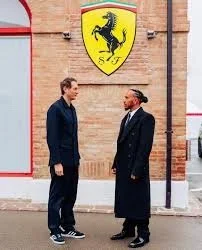
When Ferrari chairman John Elkann later suggested that drivers should “talk less and focus on driving,” it echoed that lineage. The comment may have been intended as discipline. But it revealed something deeper—a discomfort with expression. In older models of masculinity, emotion was a distraction, a weakness. Strength was obtained through control, the output was the proof. That model built icons, but it also built pressure.
Integration as Power
Hamilton represents a different configuration of power. He competes ferociously. He also speaks openly about mental health, about vulnerability, about purpose beyond the cockpit. “I don’t aspire to be like other drivers; I aspire to be unique in my own way,” he has said. He moves fluidly between racing, fashion, activism, and cultural spaces without apologizing for the range.
What makes that notable is not his softness, but his integration. Hamilton does not pretend competition is his entire identity. He has allowed emotion, style, and conscience into the architecture of his masculinity. He has not abandoned performance; he has contextualized it. When he spoke of building a more analogue Ferrari, he wasn’t asking for regression. He was pointing toward connection, toward a machine that rewards feel rather than just quantifiable dominance.
When Output Becomes Armor
For much of my own life, I believed performance could quiet everything else. Work harder, produce more. Achieve enough, and the internal noise would subside…it did not. The unacknowledged parts do not disappear; they accumulate. Eventually they surface—sometimes abruptly—without a language to process them.
Ferrari’s culture, like many institutions built in the twentieth century, reflects a masculinity that mastered output but sidelined integration. That model thrived in an era that rewarded conquest, expansion, and visible dominance. But today’s world is shifting. Cultural capital now includes emotional intelligence, aesthetic awareness, and the ability to navigate complexity without guarding against it.
This does not mean performance is obsolete, but rather that performance alone is insufficient. The friction between Hamilton and Ferrari is not simply about team results or product direction. It is about process and sequence. Ferrari’s legacy model suggests: perform first, define your identity through victory. Hamilton’s posture suggests: define your identity, and performance follows. Neither model is wholly wrong. Power without integration becomes brittle. Integration without power becomes performative.
Ferrari will continue to build extraordinary machines. Hamilton will continue to compete at the highest level. But their intersection surfaces a question that extends beyond Formula 1: what does strength look like when dominance alone no longer feels sufficient?
The Next Configuration of Masculinity
The traditional masculine virtues are not the problem. The ability to lead, to endure, to build, to pursue mastery—these are worthy traits. Civilizations depend on them. The fracture occurs when those qualities are performed without embodiment; when power is disconnected from empathy, when leadership resists listening, when output becomes armor against vulnerability. Performance without presence may win the day, but it does not nourish.
On the other side, integration does not weaken ambition; it stabilizes it. It asks a man to remain powerful while also remaining aware. Integration asks us to compete without losing connection, to lead without silencing feeling, to build without hiding from reflection.
Hamilton’s instinct toward analogue feel is not regression, but coherence. It reflects a desire for machines—and perhaps identities—that allow strength and sensitivity to coexist. If the next era of masculinity has a defining trait, it may not be dominance or detachment, but integration: the capacity to hold force and feeling in the same frame without either collapsing.
The brands and the men who thrive next may be the ones who can do the same.