When Luxury Lowers its Voice: Inside AP House London
Much of luxury retail is louder than it likes to admit. Bond Street glitters. Flagships stretch skyward. Glass, marble, and scale announce success before you’ve crossed the threshold.
Audemars Piguet’s AP House London does the opposite.
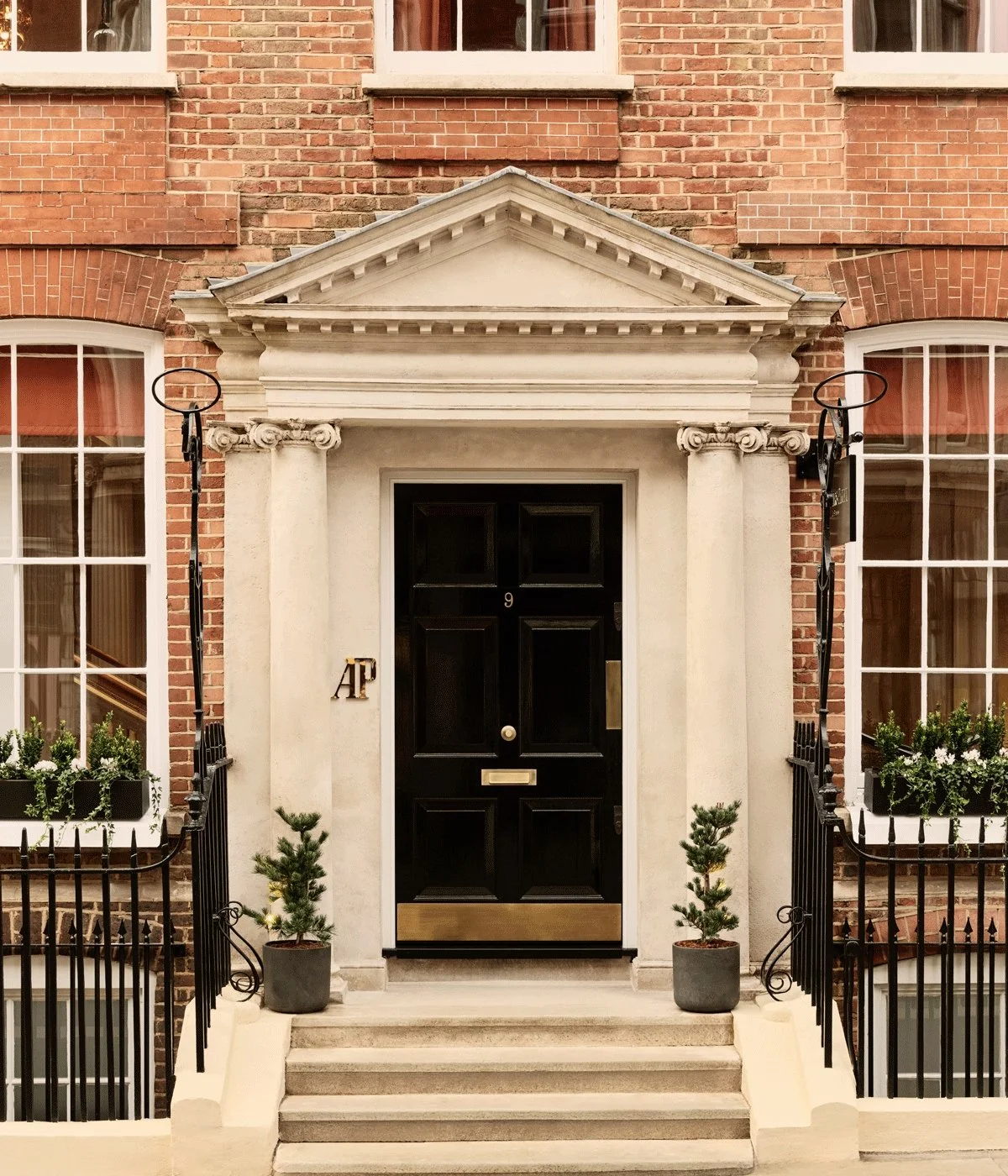
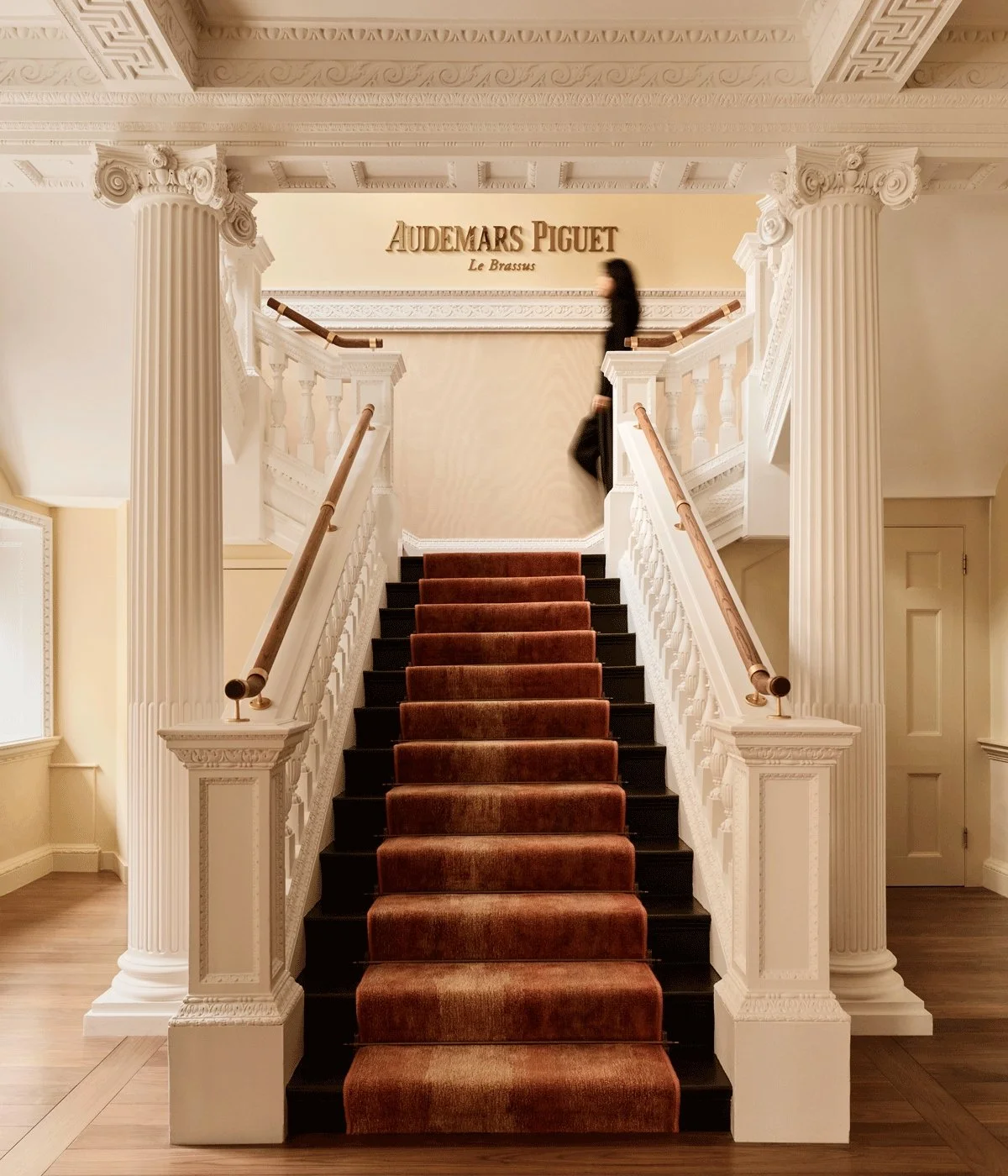
Tucked just off the main drag on Clifford Street, the entrance is understated. An impeccably dressed doorman opens the door and you step into something that feels less like a boutique and more like a social club. Rich wood, marble, restored Victorian detailing, but light, airy and calm. You are greeted immediately, with ease not urgency. The shift is subtle, but unmistakable: you are no longer shopping, you are being hosted.
The main conversation area unfolds as an open but articulated space—seating clusters that nod subtly to British pub design, yet rendered in modern wood, stone, and bronze. The materials quietly echo Audemars Piguet’s origins in Le Brassus, in Switzerland’s Vallée de Joux in the Jura Mountains. There is a subtle scent in the air, carefully calibrated humidity, an environment engineered for comfort without feeling contrived.
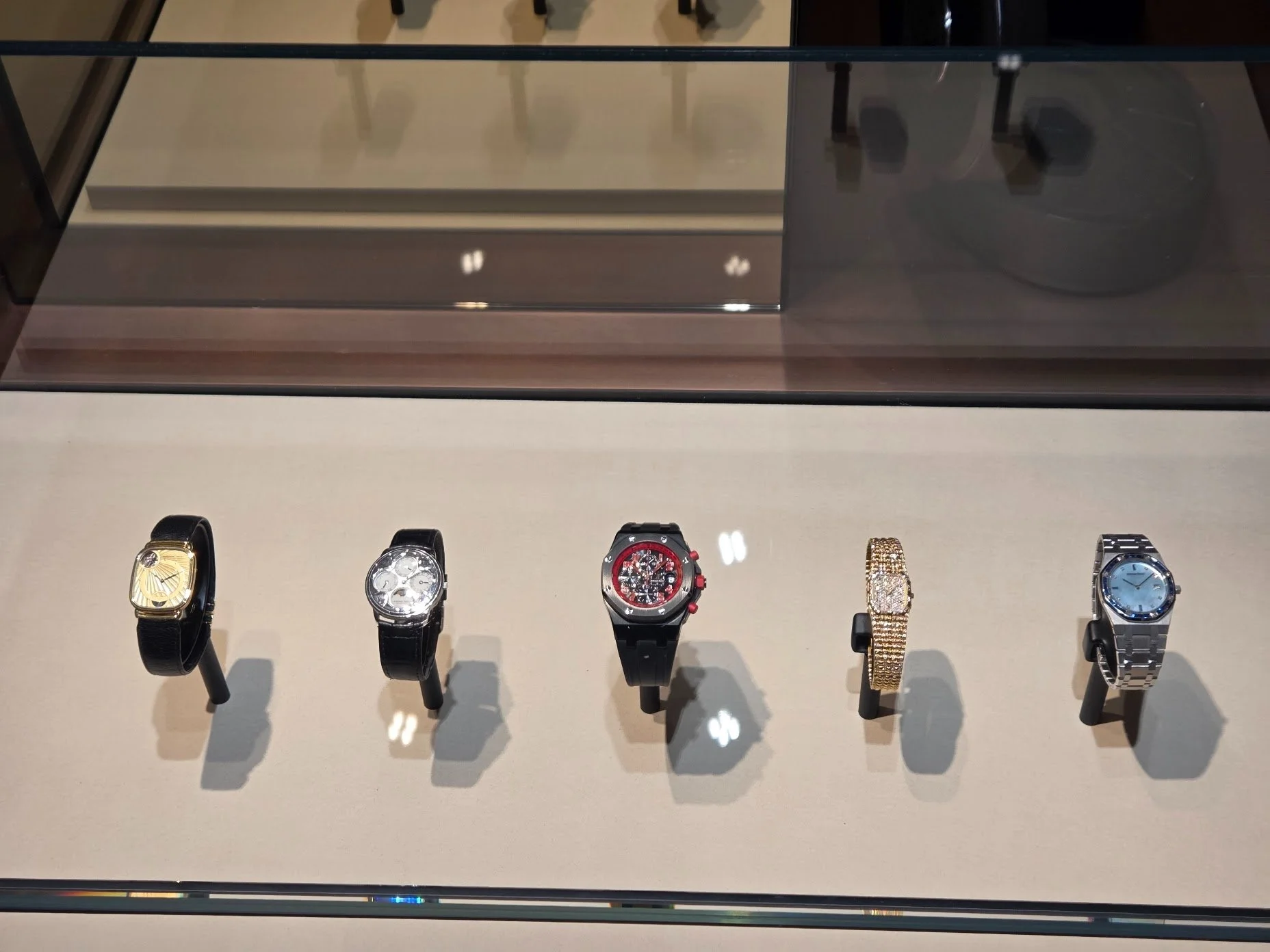
At one end, what appears to be a bar reveals itself as a maintenance station—watch straps displayed behind a bartender’s stance. At the other, an oversized Marshall jukebox anchors the room. The watches visible at first are not for sale; they are historical pieces, museum objects and cultural artifacts. In just three cases you see design evolution: victorian, art deco, minimalist, brutalist; the heritage here is unmistakable.
Before any product discussion begins, you are offered coffee or tea. You are invited to sit, take a breath, then you talk and listen. For forty-five minutes, we discussed the brand’s founders, its evolution, its design language, and the philosophy behind AP Houses globally. Each location is tailored to its city, but always tied back to Le Brassus. The brand does not expand by erasing its origins, instead they translate it.
Upstairs, the atmosphere becomes more intimate. Separate rooms allow for model discussions and, eventually, ordering. It is here that the economics surface gently. The Royal Oak—the brand’s most coveted model—carries waiting lists from months to years. The London house may allocate as few as ten per year. With roughly 50,000 watches produced annually worldwide, scarcity is structural, not theatrical.
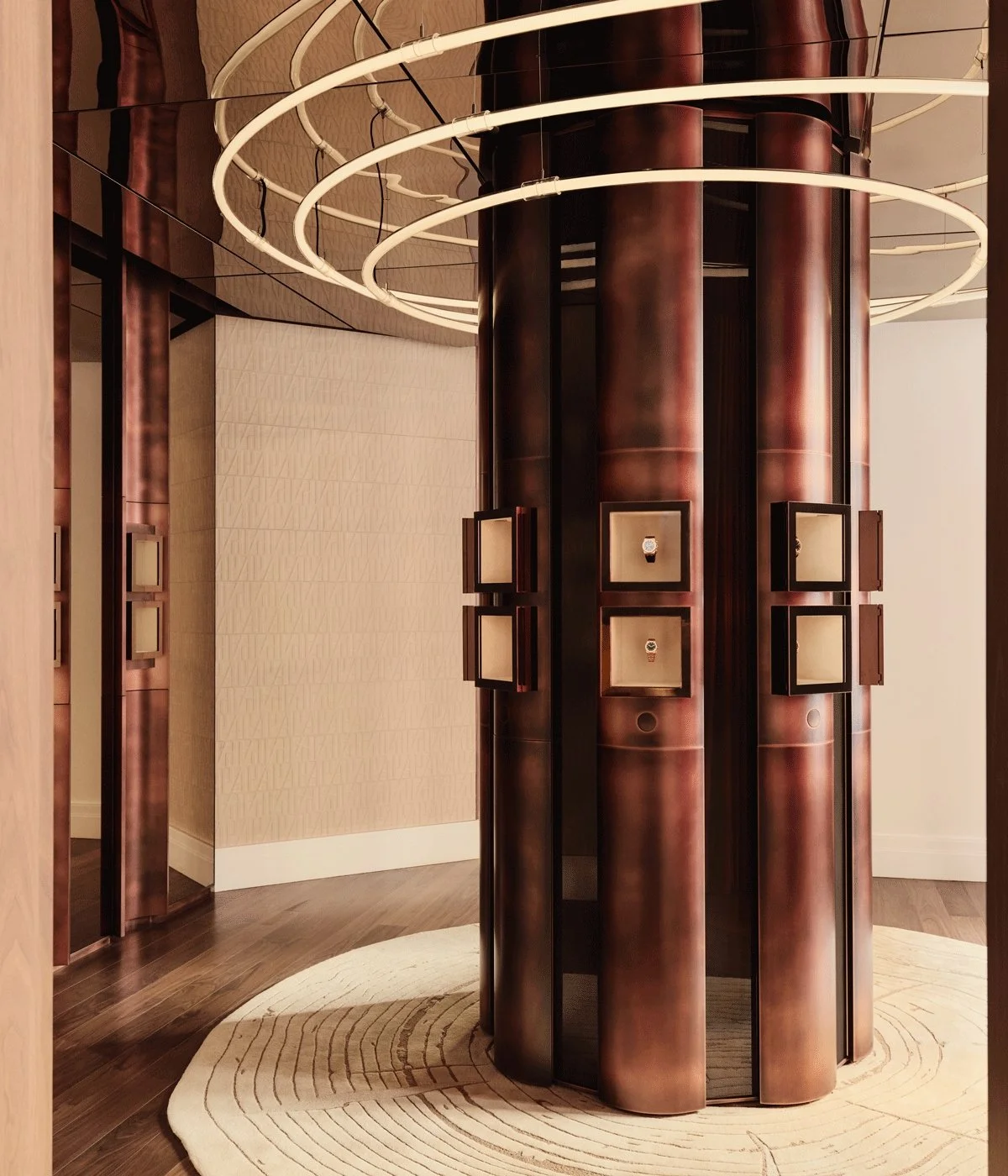
What stands out most, however, is the 360-degree display case. It is not merely a showcase; it feels like you have stepped inside the mechanism of a watch itself. Models are not grouped hierarchically. Royal Oaks sit beside complications and references of differing eras. Finishes and forms converse with one another. The watches are allowed to exist as objects of craft rather than trophies. This is what coherence feels like.
Luxury economist Danetha Doe defines craft as “the governed transmission of embodied intelligence that preserves coherence, stabilizes meaning, and resists time compression within material production.” You feel that transmission here—not only in the watches, but in the staff. Conversations are fluid, unscripted; there is no pressure to transact. The salespeople speak as comfortably about Swiss horological history as they do about collaborations like Carolina Bucci’s Florentine frosted gold technique.
In mass-market watch retail, the choreography is familiar: politeness, escalation, the watch placed on your wrist as a step toward ownership. At AP House, you can try pieces on, but the expectation is different. You are unlikely to leave with one given allocation realities. Instead, you leave with context, this is not accidental.
Modern luxury brands face a paradox: scale increases visibility but risks diluting meaning. Many respond with architectural spectacle—massive stores, hyper-polished façades, experiences engineered for social media. But scale without coherence erodes value.
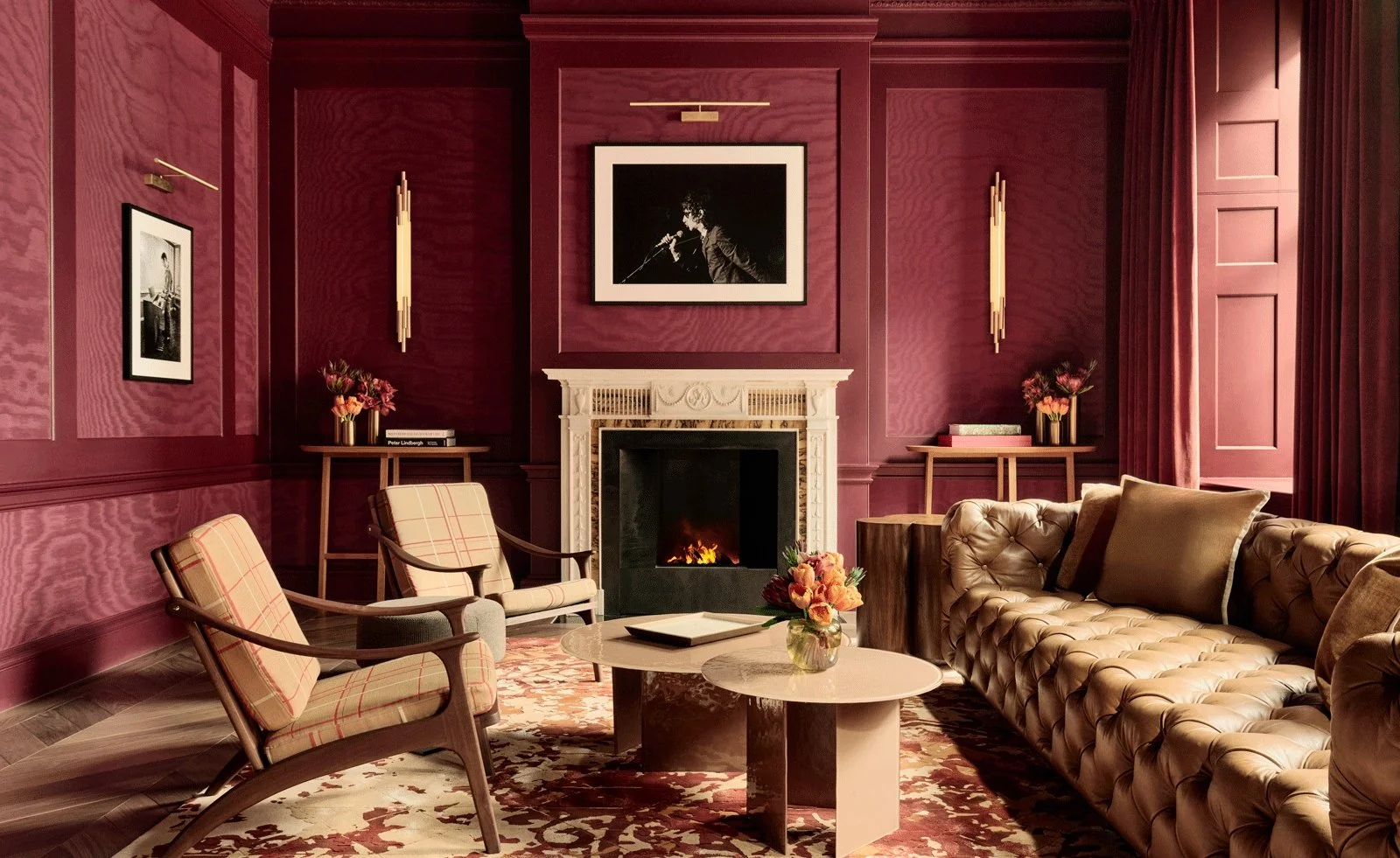
AP House operates on a different principle. Rather than chasing mass awareness, it cultivates depth. It aligns with Marcus Collins’ idea of cultural contagion: growth happens not by reaching everyone, but by deeply connecting with the right few. The space builds ambassadors through immersion, not persuasion.
There is a quiet power here. Not aggressive, not performative, just confident. Audemars Piguet produces a limited number of watches at a high cost of entry. It will always be a restricted circle. But AP House is not simply a veil-lift into exclusivity. It is an invitation to understand the brand’s internal logic—its material choices, its partnerships, its pacing.
Audemars Piguet is still family-owned. Perhaps that continuity matters. Perhaps it allows the brand to think generationally rather than quarterly, to cultivate belonging rather than attention. In that restraint lies a quiet advantage. Luxury that deepens meaning may be the only kind capable of surviving time.